In the quiet hum of data centers, a revolution stirs—one where decades-old mainframes, once the titans of enterprise computing, now face their most formidable challenger: the cloud. As organizations seek agility, scalability, and cost-efficiency, Mainframe Migration AWS has emerged not as a trend, but as a strategic imperative grounded in scientific evolution and digital necessity.



Mainframe Migration AWS: Understanding the Core Drivers

The shift from legacy mainframe systems to modern cloud environments like Amazon Web Services (AWS) is not merely technological—it’s economic, operational, and strategic. Enterprises are no longer asking if they should migrate, but how and when. The primary catalysts include escalating maintenance costs, talent shortages for COBOL and legacy systems, and the urgent need for digital transformation to remain competitive.
Rising Operational Costs of Legacy Systems
Mainframes, while reliable, come with significant overhead. According to a 2023 Gartner report, maintaining a mainframe environment can cost up to 3–5 times more than an equivalent cloud infrastructure. These costs stem from proprietary hardware, specialized cooling, energy consumption, and expensive software licensing models.
- Annual mainframe maintenance can exceed $1 million for mid-sized enterprises.
- Energy consumption alone accounts for nearly 40% of total operational costs.
- Proprietary software licenses often require long-term contracts with limited flexibility.
By contrast, AWS offers a pay-as-you-go model, eliminating capital expenditures and enabling dynamic scaling. This financial shift is a primary motivator behind Mainframe Migration AWS initiatives.
Scarcity of Legacy Skill Sets
One of the most underappreciated risks in enterprise IT is the aging workforce skilled in COBOL, JCL, and IMS. A 2022 IBM study revealed that over 60% of mainframe professionals are aged 45 or older, with fewer than 5% of computer science graduates learning legacy languages.
“The average age of a COBOL programmer is 47.5 years, and the pipeline is drying up.” — IBM Institute for Business Value
This skills gap creates operational fragility. When critical systems fail, finding experts to troubleshoot becomes a bottleneck. Migrating to AWS allows organizations to transition to modern development stacks—Java, Python, Node.js—where talent is abundant and innovation cycles are faster.
Demand for Business Agility and Innovation
In today’s digital economy, speed to market determines survival. Mainframes, designed for batch processing and transactional integrity, are ill-suited for real-time analytics, microservices, or AI integration. AWS, with its vast ecosystem of services like Amazon EC2, Lambda, and SageMaker, enables rapid prototyping, DevOps integration, and continuous delivery.
- Organizations report 40–60% faster deployment cycles post-migration.
- Cloud-native architectures support A/B testing, CI/CD pipelines, and automated scaling.
- Integration with mobile, web, and IoT platforms becomes seamless.
Thus, Mainframe Migration AWS is not just about cost savings—it’s about unlocking innovation potential.
Key Challenges in Mainframe Migration AWS
Despite its compelling benefits, migrating from mainframes to AWS is fraught with complexity. The journey is not a simple lift-and-shift; it requires deep architectural rethinking, data integrity assurance, and change management. Understanding these challenges is the first step toward mitigating risk.
Data Volume and Complexity
Mainframes often manage petabytes of structured data stored in hierarchical databases like IMS or flat-file systems such as VSAM. Extracting, transforming, and loading this data into AWS-compatible formats (e.g., Amazon RDS, DynamoDB, or S3) demands meticulous planning.
- Data dependencies are often undocumented, buried in decades of incremental changes.
- Batch jobs with interdependent workflows can span hundreds of steps.
- Real-time transaction consistency must be preserved during cutover.
Tools like AWS Schema Conversion Tool (SCT) and AWS Database Migration Service (DMS) help automate schema and data migration, but human oversight remains critical.
Application Modernization Complexity
Many mainframe applications are monolithic, tightly coupled, and written in COBOL or PL/I. Direct porting to the cloud is rarely feasible. Instead, organizations must choose between rehosting, refactoring, rearchitecting, or rebuilding.
- Rehosting: Lift-and-shift using platforms like Micro Focus or LzLabs, preserving logic but running on AWS infrastructure.
- Refactoring: Converting COBOL to Java or .NET while retaining business logic.
- Rearchitecting: Breaking monoliths into microservices using containers (EKS) or serverless (Lambda).
Each approach carries trade-offs in cost, time, and risk. A hybrid strategy is often optimal.
Regulatory and Compliance Risks
Industries like banking, healthcare, and government are bound by strict regulations (e.g., GDPR, HIPAA, PCI-DSS). Migrating sensitive data to AWS requires robust encryption, identity management, and audit logging.
“AWS provides over 300 security, compliance, and governance features, but configuration is the customer’s responsibility.” — AWS Well-Architected Framework
Organizations must ensure that data residency, access controls, and retention policies are enforced in the cloud. AWS Artifact, Config, and CloudTrail are essential tools for compliance monitoring.
Mainframe Migration AWS: A Step-by-Step Strategic Framework
Successful Mainframe Migration AWS projects follow a structured, phased approach. Rushing into migration without a blueprint leads to cost overruns, downtime, and data loss. Below is a proven seven-step framework used by Fortune 500 companies.
Step 1: Discovery and Assessment
Begin with a comprehensive inventory of all mainframe assets: applications, databases, batch jobs, dependencies, and user access patterns. Use automated discovery tools like BMC AMI, IBM Z Discovery and Dependency Manager, or AWS Migration Hub.
- Map application interdependencies and data flows.
- Classify applications by criticality, complexity, and business impact.
- Estimate cloud resource requirements using AWS TCO Calculator.
This phase sets the foundation for prioritization and risk assessment.
Step 2: Define Migration Strategy
Choose the right migration pattern for each workload:
- Rehost (Lift-and-Shift): Fastest path, minimal code change. Ideal for stable, low-risk applications. Tools: LzLabs Software Defined Mainframe, Micro Focus Enterprise Server.
- Refactor (Lift-Tinker-and-Shift): Modify code for cloud optimization. Example: Convert COBOL to Java using AI-assisted tools like IBM Watson Code Assistant.
- Rearchitect: Redesign as microservices. Use AWS App2Container for containerization.
- Replace: Swap with SaaS solutions (e.g., SAP, Salesforce).
- Retire: Decommission obsolete applications.
A portfolio-based approach ensures optimal resource allocation.
Step 3: Build the Cloud Foundation
Before migration, establish a secure, scalable AWS environment. Implement:
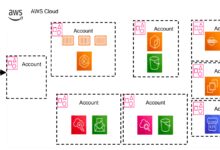
- AWS Organizations for multi-account governance.
- Identity and Access Management (IAM) with least-privilege policies.
- Virtual Private Cloud (VPC) with subnets, route tables, and security groups.
- Centralized logging via CloudWatch and AWS CloudTrail.
- Backup and disaster recovery using AWS Backup and S3 versioning.
Adopt the AWS Well-Architected Framework to ensure operational excellence, security, and reliability.
Tools and Technologies Enabling Mainframe Migration AWS
The success of Mainframe Migration AWS hinges on leveraging the right tools. AWS and third-party vendors offer a robust ecosystem to automate, accelerate, and de-risk the transition.
Mainframe Migration AWS – Mainframe Migration AWS menjadi aspek penting yang dibahas di sini.
AWS Native Migration Services
AWS provides several first-party tools designed specifically for enterprise migrations:
- AWS Database Migration Service (DMS): Supports homogeneous and heterogeneous migrations from mainframe databases to Amazon RDS, Aurora, or DynamoDB. Learn more at AWS DMS.
- AWS Schema Conversion Tool (SCT): Automates schema transformation from IMS, DB2, or VSAM to relational or NoSQL formats.
- AWS Migration Hub: Provides a unified view of all migration activities across AWS and on-premises environments.
- AWS Application Discovery Service: Identifies on-premises applications and their dependencies.
These tools integrate seamlessly with AWS’s global infrastructure, ensuring high availability and low latency.
Third-Party Modernization Platforms
Specialized vendors offer advanced capabilities for COBOL modernization and mainframe emulation:
- LzLabs Software Defined Mainframe: Allows mainframe workloads to run on x86 servers in AWS without code changes. Visit LzLabs.
- Micro Focus Enterprise Suite: Enables rehosting of COBOL, JCL, and CICS applications on AWS.
- IBM z/OS Cloud Broker: Facilitates deployment of z/OS workloads in hybrid cloud environments.
- Blu Age by Fujitsu: AI-driven COBOL modernization to Java or .NET.
These platforms reduce technical debt while preserving business logic.
DevOps and Automation Tools
Post-migration, continuous integration and delivery are essential. Tools like Jenkins, GitLab CI, and AWS CodePipeline enable automated testing and deployment. Infrastructure as Code (IaC) using Terraform or AWS CloudFormation ensures reproducibility and compliance.
“Automation reduces human error by up to 70% in migration projects.” — McKinsey & Company
Integrating these tools early ensures long-term maintainability.
Cost Optimization in Mainframe Migration AWS
One of the most compelling arguments for Mainframe Migration AWS is cost reduction. However, without proper planning, cloud costs can spiral. A strategic approach to cost optimization is essential.
TCO Comparison: Mainframe vs. AWS
A detailed Total Cost of Ownership (TCO) analysis reveals significant savings:
- Mainframe TCO includes hardware, software, power, cooling, floor space, and labor.
- AWS TCO includes compute, storage, data transfer, and management tools.
- Studies show AWS can reduce TCO by 40–60% over five years.
Use the AWS TCO Calculator to model your specific scenario.
Right-Sizing and Reserved Instances
Over-provisioning is a common pitfall. Use AWS Compute Optimizer to analyze historical usage and recommend optimal instance types.
- Reserved Instances (RIs) offer up to 72% savings over On-Demand pricing.
- Savings Plans provide flexible commitment models for steady-state workloads.
- Spot Instances can be used for non-critical, fault-tolerant batch jobs.
Combining these strategies can reduce compute costs by over 50%.
Data Storage and Transfer Efficiency
Data storage is another major cost driver. AWS offers tiered storage options:
- Amazon S3 Standard for frequently accessed data.
- S3 Intelligent-Tiering for automatic cost optimization.
- S3 Glacier for archival, reducing costs by up to 90%.
Minimize data transfer costs by using AWS Direct Connect for high-volume, low-latency connectivity between on-premises and AWS.
Security and Compliance in Mainframe Migration AWS
Security is not an afterthought—it must be embedded in every phase of Mainframe Migration AWS. AWS provides a shared responsibility model: AWS secures the cloud, customers secure their data in the cloud.
Data Encryption and Key Management
All sensitive data must be encrypted at rest and in transit:
- Use AWS Key Management Service (KMS) to manage encryption keys.
- Enable S3 server-side encryption (SSE-S3, SSE-KMS).
- Use TLS 1.2+ for data in transit.
For mainframe data, consider field-level encryption before migration to protect PII and financial records.
Identity and Access Control
Implement least-privilege access using IAM roles and policies:
- Use multi-factor authentication (MFA) for all users.
- Integrate with existing identity providers via AWS SSO or Active Directory.
- Monitor access patterns with AWS CloudTrail and GuardDuty.
Regularly audit permissions using IAM Access Analyzer.
Compliance Automation
Leverage AWS Config and AWS Security Hub to enforce compliance policies:
- Automatically detect non-compliant resources.
- Generate audit reports for regulators.
- Integrate with SIEM tools like Splunk or Palo Alto Cortex XSIAM.
For financial institutions, AWS supports FedRAMP, SOC 1/2/3, and PCI-DSS compliance.
Real-World Case Studies: Mainframe Migration AWS Success Stories
Theoretical frameworks are valuable, but real-world examples provide tangible proof of success. Below are three organizations that achieved transformative results through Mainframe Migration AWS.
Case Study 1: A Global Bank Reduces Costs by 55%
A Fortune 500 bank with over 200 mainframe applications faced rising operational costs and slow innovation. Using a hybrid rehosting and rearchitecting strategy with LzLabs and AWS, they migrated 70% of workloads over 18 months.
- Reduced annual IT spend by $48 million.
- Improved deployment frequency from monthly to daily.
- Maintained 99.99% uptime during cutover.
Source: AWS Customer Success Story.
Mainframe Migration AWS – Mainframe Migration AWS menjadi aspek penting yang dibahas di sini.
Case Study 2: Healthcare Provider Achieves HIPAA Compliance
A U.S. healthcare organization migrated patient records and billing systems from a z/OS mainframe to AWS. They used AWS DMS for data migration and rearchitected applications using microservices on EKS.
- Met HIPAA and HITECH requirements with encrypted storage and audit trails.
- Reduced latency for EHR access by 60%.
- Enabled AI-driven analytics for patient care.
The migration improved both compliance and patient outcomes.
Case Study 3: Retailer Scales During Peak Season
A multinational retailer migrated its inventory and order management system from a mainframe to AWS. By adopting serverless Lambda functions and DynamoDB, they achieved elastic scalability.
- Handled Black Friday traffic spikes 5x higher than previous years.
- Reduced provisioning time from weeks to minutes.
- Integrated with mobile apps and third-party marketplaces.
This agility translated directly into revenue growth.
Future Trends: The Evolution of Mainframe Migration AWS
The journey doesn’t end with migration. The future lies in continuous optimization, AI integration, and hybrid architectures.
AI-Powered Modernization
Artificial intelligence is revolutionizing code conversion. Tools like IBM Watson and AWS CodeWhisperer can analyze COBOL logic and generate equivalent Java or Python code with high accuracy.
- AI reduces manual effort by up to 80%.
- Machine learning models predict migration risks and optimize test cases.
This accelerates timelines and reduces errors.
Hybrid and Multi-Cloud Strategies
Not all workloads will move to AWS. Many enterprises adopt hybrid models, keeping core transactional systems on-premises while moving customer-facing apps to the cloud.
- AWS Outposts brings native AWS services to on-premises data centers.
- Multi-cloud strategies avoid vendor lock-in and enhance resilience.
Interoperability becomes key.
Sustainable Computing
Cloud migration also supports ESG goals. AWS data centers are powered by 100% renewable energy, reducing carbon footprint compared to aging mainframe facilities.
“Migrating to AWS can reduce an organization’s IT carbon emissions by up to 88%.” — 451 Research
Sustainability is becoming a boardroom priority.
What are the main benefits of Mainframe Migration AWS?
The primary benefits include significant cost savings (40–60% TCO reduction), improved scalability and agility, access to modern development tools, enhanced disaster recovery, and reduced environmental impact. AWS enables faster innovation and better integration with digital platforms.
How long does a typical Mainframe Migration AWS project take?
Timelines vary based on complexity. Small-scale migrations can take 3–6 months, while enterprise-wide initiatives may span 18–36 months. Phased approaches, starting with low-risk applications, are recommended to manage risk and build momentum.
Is it possible to migrate COBOL applications to AWS?
Yes. COBOL applications can be migrated via rehosting (using platforms like LzLabs), refactoring (converting to modern languages), or rearchitecting (breaking into microservices). AWS supports all three approaches with tools and partner ecosystems.
What are the risks of Mainframe Migration AWS?
Risks include data loss, downtime, performance degradation, compliance violations, and underestimated costs. These can be mitigated through thorough planning, testing, phased rollouts, and leveraging AWS’s migration tools and best practices.
Can mainframe data be securely stored in AWS?
Absolutely. AWS provides robust security features including encryption (at rest and in transit), IAM, VPC isolation, and compliance certifications. When configured correctly, AWS can be more secure than traditional mainframe environments.
Mainframe Migration AWS represents a pivotal shift in enterprise IT—one that combines economic pragmatism with technological ambition. By understanding the drivers, challenges, and strategies, organizations can navigate this complex journey with confidence. Leveraging AWS’s tools, adopting a phased approach, and learning from real-world successes ensures not just survival, but transformation. The future belongs to those who migrate not just systems, but mindsets.
Mainframe Migration AWS – Mainframe Migration AWS menjadi aspek penting yang dibahas di sini.
Recommended for you 👇
Further Reading: