Logging into AWS doesn’t have to be complicated. Whether you’re a beginner or a seasoned cloud engineer, mastering the AWS login process is your first step toward seamless cloud management. Let’s break it down—simply, securely, and smartly.




AWS Login: The Foundation of Cloud Access

The AWS login is your gateway to one of the most powerful cloud platforms in the world. Amazon Web Services (AWS) powers millions of applications globally, and accessing it starts with a secure and reliable login process. Understanding how to log in properly ensures not only access but also protects your data, applications, and infrastructure.
What Is AWS Login?
AWS login refers to the authentication process that allows users to access the AWS Management Console, Command Line Interface (CLI), or Software Development Kits (SDKs). It verifies your identity using credentials such as username/password, access keys, or federated identity providers.
- It’s the first line of defense in cloud security.
- It supports multiple authentication methods including IAM users, root accounts, and SSO.
- Every AWS login attempt is logged for audit and compliance.
“The AWS login experience is designed to balance ease of use with enterprise-grade security.” — AWS Security Best Practices Guide
Different Types of AWS Login Methods
There are several ways to perform an AWS login, each suited for different use cases:
- AWS Management Console Login: The web-based interface for managing AWS resources.
- AWS CLI Login: Used by developers and DevOps engineers via command-line tools.
- Federated Login (SSO): Enables single sign-on through identity providers like Okta, Microsoft Azure AD, or Google Workspace.
- Programmatic Access: Uses access keys and secret keys for scripts and automation.
Choosing the right method depends on your role, workflow, and security requirements.
Step-by-Step Guide to AWS Console Login
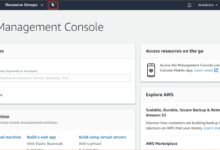
The most common way to access AWS is through the AWS Management Console. This graphical interface allows users to manage services like EC2, S3, Lambda, and more. Here’s how to log in step by step.
How to Access the AWS Login Page
To begin the AWS login process, navigate to the official AWS sign-in page: https://aws.amazon.com/console/. From there, you’ll see two options: “Root user” and “IAM user”.
- Click “Sign-In to the Console” to proceed.
- Choose whether you’re logging in as the root account or an IAM user.
- Always avoid using the root account for daily operations.
For enhanced security, AWS recommends using IAM (Identity and Access Management) users instead of the root account.
Logging In as an IAM User
If you’re using an IAM user account, follow these steps:
- Go to the AWS sign-in URL.
- Select “IAM user” from the dropdown.
- Enter your account ID or alias.
- Type your IAM username and password.
- Complete multi-factor authentication (MFA) if enabled.
Once authenticated, you’ll be redirected to the AWS Management Console dashboard. This method is ideal for team members who need limited, role-based access.
“IAM users should have the least privilege necessary to perform their tasks.” — AWS IAM Documentation
Understanding AWS Root vs. IAM User Login
One of the most critical decisions in AWS login strategy is choosing between root and IAM user credentials. Each has distinct roles, risks, and best practices.
Root Account Login: Power and Risk
The root account is created when you first sign up for AWS. It has unrestricted access to all resources and billing information.
- Can create and delete any resource.
- Has full control over billing and account settings.
- Cannot be restricted by IAM policies.
Because of its power, AWS strongly advises against using the root account for routine tasks. Instead, it should be secured and used only for specific administrative actions like setting up billing alerts or enabling AWS Organizations.
IAM User Login: The Secure Standard
IAM users are individual identities created within your AWS account. They can be assigned specific permissions based on roles and policies.
- Permissions can be fine-tuned using IAM policies.
- Supports MFA for added security.
- Can be deactivated or deleted without affecting the root account.
Best practice: Create IAM users for every team member and assign them the minimum permissions they need. This principle, known as least privilege, is central to AWS security.
Setting Up Multi-Factor Authentication (MFA) for AWS Login
Multi-Factor Authentication (MFA) is one of the most effective ways to secure your AWS login. It adds an extra layer of protection beyond just a password.
Why MFA Is Critical for AWS Security
Even strong passwords can be compromised through phishing or data breaches. MFA requires a second form of verification, making unauthorized access significantly harder.
- Reduces the risk of account takeover.
- Required for compliance with standards like SOC 2 and HIPAA.
- Supported across AWS Console, CLI, and API calls.
According to AWS, enabling MFA can block over 99% of automated attacks targeting account credentials.
How to Enable MFA on Your AWS Account
To enable MFA:
- Log in to the AWS Management Console as a user with IAM permissions.
- Navigate to the IAM dashboard.
- Select your user profile and choose “Security credentials”.
- Under “Multi-factor authentication (MFA)”, click “Assign MFA”.
- Choose a virtual MFA device (like Google Authenticator or Authy) or a hardware key.
- Scan the QR code and enter two consecutive codes to verify.
Once enabled, MFA will be required every time you log in. For CLI access, you’ll need to generate temporary credentials using STS (Security Token Service).
“Enabling MFA is the single most impactful step you can take to secure your AWS environment.” — AWS Chief Security Officer
Using AWS CLI and Programmatic Login
For developers and automation workflows, logging into AWS isn’t done through a browser. Instead, programmatic access via the AWS CLI or SDKs is used.
Configuring AWS CLI for Secure Login
The AWS CLI allows you to interact with AWS services using commands in your terminal. To set it up:
- Install the AWS CLI from https://aws.amazon.com/cli/.
- Run
aws configurein your terminal. - Enter your Access Key ID and Secret Access Key.
- Set your default region (e.g., us-east-1).
- Choose an output format (json, text, table).
These credentials are stored locally in ~/.aws/credentials and should be protected like passwords.
Best Practices for Programmatic AWS Login
When using programmatic access, security is paramount:
- Never hardcode credentials in source code.
- Use IAM roles for EC2 instances instead of access keys.
- Rotate access keys regularly (every 90 days).
- Use temporary credentials via IAM roles or STS.
For applications running on AWS, always prefer IAM roles over long-term access keys. Roles provide temporary, auto-rotating credentials that reduce the risk of exposure.
Single Sign-On (SSO) and Federated AWS Login
For organizations with multiple users and existing identity systems, AWS SSO provides a centralized way to manage access across AWS accounts and third-party applications.
What Is AWS SSO?
AWS Single Sign-On (SSO) allows users to log in once and gain access to multiple AWS accounts and business applications. It integrates with identity providers like Microsoft Active Directory, Okta, and Ping Identity.
- Eliminates the need for separate IAM users in each account.
- Centralizes user management and permissions.
- Supports SAML 2.0 and OpenID Connect (OIDC).
With AWS SSO, you can assign users to permission sets that define what they can do in each AWS account.
Setting Up Federated Login with SAML
Federated login allows users to authenticate through an external identity provider (IdP). Here’s how to set it up:
- Configure your IdP (e.g., Azure AD) to trust AWS as a service provider.
- In AWS, go to IAM and create a SAML provider.
- Upload the IdP metadata file to AWS.
- Create an IAM role with a trust policy that allows the SAML provider to assume it.
- Map SAML attributes to AWS roles.
Once configured, users can log in via their corporate credentials without needing AWS-specific usernames or passwords.
“Federated login reduces password fatigue and improves security by leveraging enterprise identity systems.” — AWS Identity Whitepaper
Troubleshooting Common AWS Login Issues
Even with proper setup, users may encounter issues during the AWS login process. Knowing how to troubleshoot them saves time and prevents downtime.
Forgot Password or Locked Out?
If you’ve forgotten your password or been locked out:
- For IAM users: Contact your AWS account administrator to reset the password.
- For root users: Use the “Forgot Password?” link on the login page.
- Ensure MFA devices are accessible during recovery.
Prevention tip: Store root account credentials in a secure password manager and limit access to trusted personnel.
Access Denied or Permission Errors
“Access Denied” errors are common and usually stem from IAM policy misconfigurations.
- Check if the user has the necessary IAM policies attached.
- Verify the correct AWS region is selected.
- Ensure MFA is not required but not provided (for CLI or API calls).
Use the AWS IAM Policy Simulator to test permissions before deployment.
Browser or Cache-Related Login Problems
Sometimes, login issues are caused by browser settings:
- Clear cookies and cache for aws.amazon.com.
- Disable browser extensions that may interfere with login.
- Try incognito mode or a different browser.
If the problem persists, check AWS Service Health Dashboard to rule out outages.
Best Practices for Secure AWS Login Management
Securing your AWS login is not a one-time task. It requires ongoing vigilance and adherence to best practices.
Enforce Strong Password Policies
Use IAM to define password policies that require:
- Minimum length (14+ characters recommended).
- Complexity (uppercase, lowercase, numbers, symbols).
- Password rotation every 60–90 days.
- Prevention of password reuse.
These policies help protect against brute-force attacks and credential stuffing.
Monitor Login Activity with AWS CloudTrail
AWS CloudTrail logs every login attempt, successful or failed. You can use it to:
- Track who logged in and from where.
- Detect suspicious activity (e.g., logins from unusual locations).
- Generate alerts using Amazon CloudWatch.
Enable CloudTrail in all regions and store logs in a separate, secure S3 bucket.
Use AWS Organizations for Multi-Account Login Management
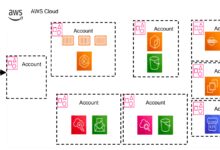
For enterprises with multiple AWS accounts, AWS Organizations helps centralize user access and policies.
- Create an organization with a management account.
- Invite member accounts.
- Apply Service Control Policies (SCPs) to restrict actions across accounts.
- Integrate with AWS SSO for unified login.
This approach scales securely and reduces administrative overhead.
How do I log in to AWS for the first time?
If you’re logging in to AWS for the first time, go to https://aws.amazon.com/console/, select “Root user”, and use the email and password you used during sign-up. After logging in, immediately create an IAM user and enable MFA.
What should I do if I lose my MFA device?
If you lose your MFA device, you can disable MFA through the AWS Management Console if you have access to backup codes. For root accounts, AWS provides recovery options via account recovery email or phone. For IAM users, an administrator must remove the MFA device and re-enable it.
Can I use social logins like Google or Facebook for AWS?
No, AWS does not support social logins like Google or Facebook for direct console access. However, you can integrate AWS with identity providers like Google Workspace via SAML-based federation or AWS Cognito for customer-facing applications.
How do I switch between AWS accounts after login?
You can switch between AWS accounts using the account switcher in the top-right corner of the AWS Console. Alternatively, use AWS SSO to manage access across multiple accounts with a single login.
Is it safe to use AWS CLI with access keys?
Using AWS CLI with access keys is safe if best practices are followed: store keys securely, rotate them regularly, and avoid hardcoding them in scripts. For better security, use IAM roles or temporary credentials via MFA and STS.
Mastering the AWS login process is essential for anyone working with Amazon Web Services. From choosing between root and IAM users to enabling MFA and setting up federated access, each step plays a crucial role in securing your cloud environment. By following best practices—like using strong passwords, monitoring login activity, and leveraging AWS SSO—you can ensure that your AWS login is both secure and efficient. Whether you’re a solo developer or part of a large enterprise, a well-managed login strategy is the foundation of a robust cloud infrastructure.
Recommended for you 👇
Further Reading: