In a world where digital transformation defines survival, AWS Financial Services emerges not just as a tool, but as a revolution—blending cloud scalability with ironclad security to reshape how banks, insurers, and fintechs operate. This is not speculation; it’s measurable evolution.
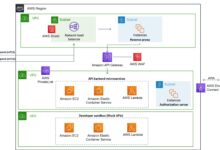
AWS Financial Services: Redefining the Financial Landscape

The financial sector, long burdened by legacy infrastructure and rigid IT systems, is undergoing a seismic shift. Amazon Web Services (AWS) has positioned itself at the epicenter of this transformation, offering a cloud ecosystem specifically tailored to meet the stringent demands of financial institutions. From global banks to agile fintech startups, AWS Financial Services provides the foundation for innovation, resilience, and compliance.
According to a 2023 report by McKinsey, over 60% of financial institutions have accelerated their cloud migration due to AWS’s proven track record in security, scalability, and regulatory alignment. The platform supports more than 10,000 financial services customers worldwide, including JPMorgan Chase, Capital One, and Allianz, demonstrating its dominance in the sector.
Why Financial Institutions Choose AWS
Financial organizations are not just adopting cloud technology—they are strategically selecting AWS due to its comprehensive compliance framework, global infrastructure, and deep integration with financial-grade security protocols. Unlike generic cloud providers, AWS offers dedicated financial services solutions that align with regional and international regulations such as GDPR, PCI-DSS, and SOX.
Moreover, AWS’s pay-as-you-go model reduces capital expenditure, allowing institutions to scale resources dynamically during market volatility or high transaction volumes. This elasticity is crucial during events like stock market surges or cryptocurrency trading spikes.
- Compliance with over 140 security standards and certifications
- Support for real-time transaction processing at petabyte scale
- Integration with AI/ML tools for fraud detection and risk modeling
“AWS enables financial institutions to innovate faster while maintaining the highest standards of security and compliance.” — AWS Executive Leadership Team
The Evolution of Cloud in Finance
Historically, financial institutions relied on on-premises data centers due to concerns over data sovereignty and security. However, the 2008 financial crisis and subsequent regulatory reforms highlighted the inefficiencies of siloed systems. The rise of digital banking, mobile payments, and open banking APIs created an urgent need for agile, interoperable infrastructure.
AWS responded by building a financial services-specific cloud architecture. By 2015, AWS had established dedicated financial services teams and compliance frameworks. Today, AWS Financial Services is not just a technology provider—it’s a strategic partner in digital transformation.
For example, Capital One became the first major U.S. bank to fully migrate to the cloud, shutting down its data centers in 2020. This move reduced operational costs by 30% and accelerated product deployment cycles from months to weeks.
Core AWS Financial Services Offerings
AWS Financial Services is not a single product but an ecosystem of integrated services designed to address the unique challenges of the financial industry. These include data analytics, machine learning, secure transaction processing, and regulatory compliance tools—all built on a globally distributed infrastructure.
The platform’s modular design allows institutions to adopt services incrementally, minimizing disruption while maximizing ROI. Whether it’s launching a digital wallet, automating loan underwriting, or detecting fraud in real time, AWS provides the tools to execute with precision.
Amazon S3 and Financial Data Storage
Amazon Simple Storage Service (S3) is a cornerstone of AWS Financial Services, offering scalable, durable, and secure object storage for financial data. Banks use S3 to store transaction logs, customer records, and compliance documentation with 99.999999999% (11 nines) durability.
S3 integrates seamlessly with AWS’s encryption and access control systems, ensuring that sensitive financial data remains protected both at rest and in transit. Financial institutions can also leverage S3’s versioning and lifecycle policies to automate data retention and deletion in compliance with regulations like GDPR and CCPA.
For instance, a European bank uses S3 to store over 2 petabytes of customer transaction data, enabling real-time analytics while maintaining audit trails for regulatory reporting.
- Supports server-side encryption with AWS Key Management Service (KMS)
- Enables cross-region replication for disaster recovery
- Integrates with AWS Macie for automated data classification and anomaly detection
AWS Lambda and Real-Time Financial Processing
AWS Lambda, a serverless compute service, empowers financial institutions to run code in response to events without provisioning servers. This is particularly valuable for real-time fraud detection, transaction validation, and automated trading systems.
AWS Financial Services – AWS Financial Services menjadi aspek penting yang dibahas di sini.
For example, a fintech company uses Lambda functions to analyze credit card transactions in milliseconds. If a transaction exhibits suspicious patterns—such as a high-value purchase in a foreign country—the system automatically triggers a fraud alert and blocks the transaction.
Lambda’s event-driven architecture ensures that resources are consumed only when needed, reducing costs and improving efficiency. It integrates with Amazon Kinesis for streaming data and Amazon DynamoDB for low-latency database access, forming a powerful real-time processing pipeline.
“With AWS Lambda, we reduced our fraud detection latency from minutes to under 500 milliseconds.” — CTO of a Leading Fintech Startup
Security and Compliance in AWS Financial Services
Security is non-negotiable in financial services. AWS addresses this through a shared responsibility model: AWS secures the infrastructure, while customers secure their data and applications. This model is backed by a robust compliance framework that meets the requirements of global financial regulators.
AWS Financial Services supports over 140 compliance programs, including SOC 1/2/3, ISO 27001, FedRAMP, and FINRA. This allows institutions to demonstrate regulatory adherence without building compliance from scratch.
Data Encryption and Key Management
AWS provides end-to-end encryption for financial data using the AWS Key Management Service (KMS). KMS allows institutions to create and manage cryptographic keys with fine-grained access controls. Keys can be rotated automatically, and usage is logged for audit purposes.
Financial institutions can also use AWS CloudHSM, a hardware security module (HSM) that provides FIPS 140-2 Level 3 validated cryptographic key storage. This is essential for organizations that require physical control over their encryption keys, such as central banks and payment processors.
For example, a global payment network uses CloudHSM to secure its root signing keys, ensuring that digital certificates used in transaction authentication cannot be compromised.
- AWS KMS integrates with all major AWS services for seamless encryption
- CloudHSM supports Bring Your Own Key (BYOK) and Hold Your Own Key (HYOK) models
- Encryption metadata is logged in AWS CloudTrail for compliance auditing
Identity and Access Management (IAM) for Financial Systems
AWS Identity and Access Management (IAM) enables financial institutions to define and manage user permissions with precision. Roles, policies, and multi-factor authentication (MFA) ensure that only authorized personnel can access sensitive systems.
IAM supports federated identity through SAML 2.0, allowing integration with existing enterprise identity providers like Microsoft Active Directory. This is critical for large banks with thousands of employees and contractors.
Additionally, AWS Organizations and Service Control Policies (SCPs) allow financial holding companies to enforce security policies across multiple AWS accounts, ensuring consistency in compliance and cost management.
For instance, a multinational bank uses SCPs to prevent developers in regional subsidiaries from launching unapproved EC2 instances, reducing both security risks and cloud spending.
Scalability and Performance for Financial Applications
Financial applications must handle unpredictable workloads—from daily banking transactions to flash crashes in trading markets. AWS Financial Services delivers unmatched scalability and performance through its global infrastructure and auto-scaling capabilities.
With 33 Availability Zones across 12 geographic regions dedicated to financial services, AWS ensures low-latency access and high availability. Services like Amazon EC2 Auto Scaling and Elastic Load Balancing automatically adjust resources based on demand, preventing downtime during peak loads.
High-Frequency Trading on AWS
High-frequency trading (HFT) firms require microsecond-level latency and massive computational power. AWS meets these demands with specialized instances like the C5n and P4d, which offer up to 100 Gbps networking and GPU acceleration.
AWS Financial Services – AWS Financial Services menjadi aspek penting yang dibahas di sini.
By deploying trading algorithms on AWS, firms can colocate their systems in AWS’s US-East-1 region, which is physically close to major stock exchanges like NASDAQ and NYSE. This proximity reduces network latency, giving traders a competitive edge.
One HFT firm reported a 40% reduction in trade execution time after migrating to AWS, translating to millions in additional annual profits.
- Use of Elastic Fabric Adapter (EFA) for low-latency inter-node communication
- Integration with Amazon FSx for Lustre for high-speed file storage
- Deployment in AWS Wavelength for edge computing in trading
Disaster Recovery and Business Continuity
Financial institutions cannot afford downtime. AWS provides robust disaster recovery (DR) solutions through services like AWS Backup, Amazon RDS Multi-AZ deployments, and AWS CloudEndure Disaster Recovery.
With automated backup policies and cross-region replication, institutions can achieve Recovery Time Objectives (RTO) of minutes and Recovery Point Objectives (RPO) of seconds. This ensures business continuity even during regional outages or cyberattacks.
A major European insurer uses AWS CloudEndure to replicate its core policy management system across three regions. During a simulated data center failure, the system failed over in under 90 seconds with no data loss.
“AWS’s disaster recovery capabilities are a game-changer for financial resilience.” — Chief Risk Officer, Global Insurance Firm
Innovation Through AI and Machine Learning in Finance
AWS Financial Services is not just about infrastructure—it’s a platform for innovation. Artificial intelligence (AI) and machine learning (ML) are transforming how financial institutions detect fraud, assess credit risk, and personalize customer experiences.
AWS offers a suite of ML services, including Amazon SageMaker, which enables data scientists to build, train, and deploy models at scale. Pre-built AI services like Amazon Fraud Detector and Amazon Comprehend simplify implementation for non-experts.
Fraud Detection Using Amazon Fraud Detector
Amazon Fraud Detector uses machine learning to identify fraudulent transactions in real time. It analyzes historical fraud data and user behavior patterns to predict risk scores for new transactions.
Financial institutions can customize models based on their specific fraud patterns, such as account takeover attempts or synthetic identity fraud. The service integrates with AWS Lambda and Amazon API Gateway to enable real-time decisioning.
A Southeast Asian bank reduced false positives by 60% and increased fraud detection accuracy by 35% after implementing Amazon Fraud Detector.
- Leverages 20+ years of fraud protection experience from Amazon.com
- Supports custom rules and thresholds for risk-based authentication
- Provides explainable AI insights for compliance and audit purposes
Credit Scoring and Risk Assessment with SageMaker
Traditional credit scoring models often exclude underbanked populations due to lack of historical data. AWS SageMaker enables financial institutions to build alternative credit scoring models using non-traditional data sources like utility payments, mobile usage, and social behavior.
These models are trained on large datasets and validated for fairness and bias using SageMaker Clarify. The result is more inclusive lending practices without compromising risk management.
A Latin American fintech used SageMaker to develop a credit model that extended loans to 500,000 previously unbanked customers, with a default rate 20% lower than industry average.
Cost Optimization Strategies for AWS Financial Services
While AWS offers significant cost savings over on-premises infrastructure, financial institutions must actively manage their cloud spending. AWS provides several tools and strategies to optimize costs without sacrificing performance or security.
AWS Financial Services – AWS Financial Services menjadi aspek penting yang dibahas di sini.
Understanding pricing models, leveraging reserved instances, and using cost monitoring tools are essential for maximizing ROI in AWS Financial Services.
Understanding AWS Pricing Models
AWS offers multiple pricing models: On-Demand, Reserved Instances (RIs), and Spot Instances. Financial institutions can mix these based on workload predictability.
On-Demand is ideal for variable workloads like customer-facing applications. RIs provide up to 75% savings for steady-state workloads like core banking systems. Spot Instances offer up to 90% discounts for fault-tolerant, batch-processing tasks like risk simulations.
A large investment bank uses a hybrid model: RIs for its trading platform backend, On-Demand for customer portals, and Spot Instances for Monte Carlo simulations, reducing annual cloud costs by 45%.
- Use AWS Cost Explorer for historical spending analysis
- Leverage AWS Budgets to set cost and usage alerts
- Apply AWS Trusted Advisor recommendations for cost optimization
Automated Cost Management with AWS Tools
AWS provides native tools like AWS Cost and Usage Report (CUR), AWS Budgets, and AWS Organizations to help financial institutions track and control spending.
By tagging resources with cost centers, departments, or projects, organizations can allocate costs accurately and identify inefficiencies. Automation scripts using AWS Lambda can shut down unused resources during off-peak hours.
One regional bank automated the shutdown of non-production environments after business hours, saving $120,000 annually.
“Cost optimization is not a one-time project—it’s an ongoing discipline in the cloud era.” — AWS Financial Services Advisor
Future Trends: The Next Frontier of AWS Financial Services
The future of finance is digital, decentralized, and data-driven. AWS Financial Services is at the forefront of emerging trends like blockchain, quantum computing, and central bank digital currencies (CBDCs).
By investing in R&D and strategic partnerships, AWS is positioning itself as the backbone of next-generation financial infrastructure.
Blockchain and Decentralized Finance (DeFi)
AWS supports blockchain deployments through Amazon Managed Blockchain, a fully managed service for creating and managing scalable blockchain networks using Hyperledger Fabric or Ethereum.
Financial institutions are exploring blockchain for use cases like trade finance, cross-border payments, and digital identity verification. For example, a consortium of banks uses Amazon Managed Blockchain to streamline letter-of-credit processing, reducing settlement time from 10 days to 24 hours.
Additionally, AWS supports DeFi applications by providing secure, scalable infrastructure for smart contract execution and decentralized exchanges.
Quantum Computing in Financial Modeling
AWS Braket provides access to quantum computing hardware from providers like IonQ and Rigetti. While still in early stages, quantum computing holds promise for solving complex financial problems like portfolio optimization, risk analysis, and derivative pricing.
Major banks are already experimenting with quantum algorithms on AWS Braket. JPMorgan Chase, for instance, has published research on using quantum computing for Monte Carlo simulations, potentially reducing computation time from hours to seconds.
AWS Financial Services – AWS Financial Services menjadi aspek penting yang dibahas di sini.
Though practical applications are years away, AWS is ensuring financial institutions can experiment and build expertise today.
What is AWS Financial Services?
AWS Financial Services refers to the suite of cloud computing solutions offered by Amazon Web Services specifically designed for banks, insurers, fintechs, and other financial institutions. It includes secure data storage, AI-driven analytics, compliance tools, and scalable infrastructure to support digital transformation in finance.
How does AWS ensure compliance for financial institutions?
AWS maintains compliance with over 140 global standards, including GDPR, PCI-DSS, SOC, and FINRA. It provides audit-ready reports, encryption tools, and identity management systems to help financial organizations meet regulatory requirements.
Can AWS support real-time financial transactions?
Yes, AWS supports real-time transaction processing through services like Amazon Kinesis, AWS Lambda, and Amazon DynamoDB. These enable low-latency data streaming, event-driven computing, and high-performance databases for applications like fraud detection and high-frequency trading.
Is AWS cost-effective for financial institutions?
Absolutely. AWS’s pay-as-you-go model, combined with reserved instances and cost management tools, allows financial institutions to reduce IT costs by up to 50% compared to on-premises infrastructure, while improving scalability and innovation speed.
How are AI and machine learning used in AWS Financial Services?
AWS enables financial institutions to use AI/ML for fraud detection (Amazon Fraud Detector), credit scoring (Amazon SageMaker), customer service (Amazon Lex), and risk modeling. These tools improve accuracy, reduce costs, and enhance customer experiences.
The transformation of financial services through AWS is not a distant vision—it is happening now. From enhancing security and compliance to enabling real-time analytics and AI-driven innovation, AWS Financial Services provides the tools to thrive in a digital-first economy. As institutions continue to face pressure to innovate, reduce costs, and meet evolving customer expectations, AWS stands as a powerful enabler of sustainable growth and resilience. The future of finance is in the cloud, and AWS is leading the charge.
AWS Financial Services – AWS Financial Services menjadi aspek penting yang dibahas di sini.
Further Reading:
