Unlock the full potential of the AWS Console with these essential insights. Whether you’re a beginner or a seasoned pro, this guide delivers the clarity and control you need to navigate Amazon’s cloud powerhouse with confidence and precision.



What Is the AWS Console and Why It Matters

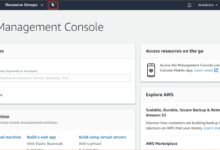
The AWS Console is the web-based user interface provided by Amazon Web Services (AWS) that allows users to manage their cloud resources efficiently. It serves as the central hub for launching instances, configuring services, monitoring performance, and managing access controls—all through an intuitive graphical interface. For businesses and developers alike, mastering the AWS Console is not just convenient; it’s critical for maximizing cloud efficiency and minimizing operational errors.
Understanding the Role of AWS Console in Cloud Computing
Cloud computing has revolutionized how organizations deploy and scale IT infrastructure. The AWS Console plays a pivotal role by offering a visual gateway to over 200 AWS services, including EC2, S3, Lambda, and RDS. Instead of relying solely on command-line tools or APIs, users can interact with these services through clickable menus, dashboards, and wizards, making cloud management more accessible to non-technical stakeholders.
- Provides real-time visibility into resource usage and costs
- Enables quick deployment of virtual servers and storage buckets
- Supports integration with third-party tools via AWS Marketplace
According to AWS’s official documentation, the Console is designed to help users “build, run, and scale applications in the cloud” with minimal friction. This makes it an indispensable tool for DevOps teams, system administrators, and cloud architects.
Key Features That Define the AWS Console Experience
The AWS Console isn’t just a dashboard—it’s a comprehensive environment equipped with tools that enhance productivity and security. Some of its standout features include service dashboards, cost calculators, resource tagging, and IAM (Identity and Access Management) controls.
Service Cards: Each service is represented by a card on the homepage, enabling one-click access.Global Search Bar: Quickly locate services, resources, or documentation using the top navigation bar.Region Selector: Easily switch between AWS regions to manage geographically distributed resources.”The AWS Console is the front door to the cloud—simple enough for beginners, powerful enough for experts.” — AWS Certified Solutions ArchitectNavigating the AWS Console Interface Like a ProOnce you log in to the AWS Console, the first thing you’ll notice is its clean, modular layout.The interface is divided into key sections: the navigation menu, the service grid, the region selector, and the user settings panel.
.Understanding how each component functions will drastically improve your workflow and reduce time spent on routine tasks..
Breaking Down the Main Dashboard Layout
The AWS Console homepage acts as a launchpad. After authentication, users are greeted with a personalized dashboard that displays recently used services, billing alerts, and service health notifications. This customizable space allows users to pin frequently accessed services for faster navigation.
- The top navigation bar includes links to Support, Billing, and Account settings.
- The left-hand sidebar provides access to all AWS services, organized by category (e.g., Compute, Storage, Networking).
- A prominent search box allows instant filtering of services by name or function.
For example, typing “S3” instantly highlights the Amazon Simple Storage Service, allowing users to jump directly to bucket management. This feature alone saves countless hours compared to manual menu navigation.
Customizing Your Console for Maximum Efficiency
One of the most underrated aspects of the AWS Console is its customizability. Users can tailor the interface to match their operational needs, whether that means setting default regions, creating custom views, or enabling accessibility features.
- Use the Settings menu to enable keyboard shortcuts and dark mode.
- Save preferred region and language preferences to avoid repeated selections.
- Create custom dashboards using AWS CloudWatch to monitor specific metrics.
Additionally, AWS offers a feature called Service Control Policies (SCPs) within AWS Organizations, which allows enterprise administrators to restrict access to certain services based on team roles—enhancing both security and usability.
Setting Up Your First AWS Console Account
Getting started with the AWS Console begins with creating an AWS account. While the process is straightforward, it involves several critical steps that impact security, billing, and long-term scalability. Skipping best practices during setup can lead to vulnerabilities or unexpected charges.
Step-by-Step Guide to Creating an AWS Account
To create an AWS account, visit aws.amazon.com and click “Create an AWS Account.” You’ll be prompted to enter your email address, create a password, and provide basic contact information. The next phase involves verifying your identity through a phone call or text message.
- Choose between Personal and Professional account types.
- Enter valid credit card details for billing verification (AWS will charge a small temporary amount).
- Select a support plan (Basic is free; higher tiers offer 24/7 support).
After completing registration, AWS grants new users access to the Free Tier, which includes 12 months of free usage for select services like EC2, S3, and Lambda—ideal for learning and small projects.
Essential Post-Setup Security Best Practices
Once your account is active, immediate action should be taken to secure it. The root user—the initial account created during signup—has unrestricted access to all AWS resources and billing information. Therefore, it’s crucial to limit its use and establish strong identity controls.
- Create an IAM user with administrative privileges instead of using the root account daily.
- Enable Multi-Factor Authentication (MFA) on the root account immediately.
- Set up billing alerts to monitor spending and prevent cost overruns.
“Never use the root user for day-to-day operations. Always delegate permissions via IAM roles.” — AWS Well-Architected Framework
Following these steps ensures your AWS Console environment remains secure from day one.
Mastering Core AWS Console Services
The true power of the AWS Console lies in its ability to manage a vast array of cloud services. While there are over 200 services available, a handful form the backbone of most cloud infrastructures. Mastering these core services through the AWS Console is essential for building scalable, resilient, and cost-effective systems.
Managing EC2 Instances via the AWS Console
Amazon Elastic Compute Cloud (EC2) is one of the most widely used services in AWS. Through the AWS Console, users can launch, configure, and monitor virtual servers with just a few clicks. The EC2 dashboard provides real-time insights into instance status, CPU utilization, and network activity.
- Launch an instance by selecting an Amazon Machine Image (AMI), instance type, and security group.
- Attach Elastic IPs for static public addresses.
- Stop, start, or terminate instances directly from the console interface.
The AWS Console also integrates with Auto Scaling and Elastic Load Balancing, allowing users to build highly available architectures without writing code. For example, you can configure scaling policies based on CPU thresholds and deploy them across multiple Availability Zones—all through the GUI.
Storing Data with Amazon S3 Using the AWS Console
Amazon S3 (Simple Storage Service) is the go-to solution for object storage in the cloud. The AWS Console makes it easy to create buckets, upload files, and set permissions. Whether you’re hosting static websites or backing up critical data, S3 offers durability, scalability, and encryption options.
- Create a new bucket by specifying a unique name and region.
- Upload objects via drag-and-drop or through the upload wizard.
- Configure bucket policies and enable versioning for data protection.
You can also enable S3 Block Public Access to prevent accidental exposure of sensitive data—a critical security measure recommended by AWS. Additionally, lifecycle rules can be set to automatically transition older data to cheaper storage classes like S3 Glacier.
Enhancing Security and Access Control in the AWS Console
Security is paramount in any cloud environment, and the AWS Console provides robust tools to manage identity, permissions, and compliance. Misconfigurations in access control are among the leading causes of cloud breaches, making proper use of IAM and other security features non-negotiable.
Implementing IAM Policies Through the AWS Console
Identity and Access Management (IAM) is the cornerstone of AWS security. The AWS Console offers a full-featured IAM dashboard where administrators can create users, groups, roles, and policies. Each policy is a JSON document that defines what actions are allowed or denied on specific resources.
- Create user groups (e.g., Developers, Admins) and assign permissions at the group level.
- Attach managed policies (like AmazonS3ReadOnlyAccess) or write custom ones.
- Use the IAM Policy Simulator to test permissions before applying them.
For example, a developer might be granted read-only access to S3 buckets but full access to Lambda functions. These granular controls ensure least-privilege access, reducing the risk of accidental or malicious changes.
Monitoring Security with AWS CloudTrail and the Console
AWS CloudTrail is a service that logs all API calls made within your AWS account, including those initiated through the AWS Console. This audit trail is invaluable for security analysis, compliance, and troubleshooting.
- Enable CloudTrail via the AWS Console to record management events and data events.
- Deliver logs to an S3 bucket for long-term retention.
- Integrate with Amazon CloudWatch for real-time alerting on suspicious activities.
For instance, if someone deletes an EC2 instance outside of maintenance hours, CloudTrail will capture the event, including the user identity, source IP, and timestamp—enabling forensic investigation.
Optimizing Costs and Performance via the AWS Console
One of the biggest challenges in cloud computing is cost management. Without proper oversight, cloud bills can spiral out of control. The AWS Console provides several built-in tools to monitor spending, optimize resource usage, and improve application performance.
Using AWS Cost Explorer to Track Spending
AWS Cost Explorer is a powerful analytics tool accessible directly from the AWS Console. It allows users to visualize, understand, and manage their AWS costs and usage over time. With interactive graphs and filtering options, teams can identify spending trends and forecast future expenses.
- View daily or monthly costs by service, region, or tag.
- Apply filters to isolate high-cost services like EC2 or RDS.
- Generate forecasts up to 12 months ahead using historical data.
For example, a company might discover that idle EC2 instances are consuming 30% of their monthly bill. Using Cost Explorer, they can pinpoint these resources and shut them down or resize them for better efficiency.
Improving Application Performance with CloudWatch
AWS CloudWatch is the monitoring and observability service integrated into the AWS Console. It collects metrics, logs, and events from AWS resources and applications, providing real-time insights into system health and performance.
- Monitor CPU, memory, and disk usage for EC2 instances.
- Set up alarms to trigger notifications when thresholds are breached.
- Use CloudWatch Dashboards to create custom views of key metrics.
For instance, if a web application experiences a sudden spike in latency, CloudWatch can alert the operations team and even trigger an auto-scaling event to add more instances automatically.
Advanced Tips and Hidden Features of the AWS Console
While many users stick to basic navigation and service management, the AWS Console hides several advanced features that can significantly boost productivity and security. These lesser-known tools are often overlooked but can make a major difference in daily operations.
Leveraging AWS Console Keyboard Shortcuts
Power users can save time by using keyboard shortcuts within the AWS Console. These shortcuts allow faster navigation between services, quicker access to search, and efficient menu toggling.
- Press F to focus on the global search bar.
- Use Ctrl + / (or Cmd + / on Mac) to open the keyboard shortcut help menu.
- Navigate between service cards using arrow keys and Enter.
These shortcuts may seem minor, but when used consistently, they reduce mouse dependency and streamline repetitive tasks—especially for cloud engineers managing multiple accounts.
Using AWS Console Mobile App for On-the-Go Management
AWS offers a mobile app that mirrors many of the functionalities found in the desktop AWS Console. Available for iOS and Android, the app allows users to monitor resources, receive alerts, and perform basic management tasks from their smartphones.
- Receive push notifications for CloudWatch alarms and billing alerts.
- Start or stop EC2 instances remotely.
- View S3 bucket contents and CloudTrail logs on mobile.
This mobility is particularly useful for DevOps teams that need to respond quickly to incidents outside the office. However, AWS recommends disabling sensitive actions (like deleting resources) on mobile devices unless MFA and device encryption are enforced.
What is the AWS Console?
The AWS Console is a web-based interface that allows users to interact with Amazon Web Services. It provides a graphical way to manage cloud resources such as EC2 instances, S3 buckets, and IAM policies, making it easier to build, deploy, and monitor applications in the cloud.
How do I secure my AWS Console account?
To secure your AWS Console account, enable Multi-Factor Authentication (MFA) on the root user, create IAM users with limited permissions, avoid using root credentials for daily tasks, and set up billing alerts. Additionally, use AWS CloudTrail to monitor API activity and detect unauthorized access.
Can I automate tasks in the AWS Console?
Yes, while the AWS Console is primarily a GUI tool, it integrates with AWS CLI, SDKs, and services like AWS CloudFormation and AWS Systems Manager to enable automation. You can also use the Console to generate CLI commands or export resource configurations for scripting.
Is the AWS Console free to use?
The AWS Console itself is free to access. However, the services you use through the Console (like EC2, S3, etc.) are billed based on usage. AWS offers a Free Tier for new users, which includes limited usage of many services at no cost for 12 months.
How can I reduce costs using the AWS Console?
You can reduce costs by using AWS Cost Explorer to analyze spending, setting up billing alerts, enabling S3 lifecycle policies, shutting down unused EC2 instances, and leveraging Reserved Instances or Savings Plans—all manageable directly through the AWS Console.
Mastering the AWS Console is a foundational skill for anyone working in the cloud. From setting up secure accounts to managing complex infrastructures and optimizing costs, the Console serves as the central nervous system of AWS operations. By leveraging its full range of features—from IAM and CloudTrail to Cost Explorer and CloudWatch—you can build secure, scalable, and cost-efficient cloud environments. Whether you’re a beginner or an experienced architect, continuous learning and exploration of the AWS Console will empower you to unlock the true potential of Amazon’s cloud platform.
Further Reading: